The difference between tea with a place, and a tea without one
Most people first encounter tea as flavour.
Earl grey, jasmine, chamomile, peach, oolong, green tea, breakfast tea. The names sit neatly on shelves, grouped by type, mood or occasion. Some are meant for mornings, some for sleep, some for digestion, some for gifting. In this form, tea becomes a small everyday object, chosen according to taste and habit.
There is nothing wrong with this. But after a while, if one keeps drinking, another question begins to surface.
Where does this tea come from?
At first, this can sound like the kind of detail that belongs to specialists. Interesting perhaps, but not essential. A tea is either pleasant or it is not. A cup either suits you or it does not. Yet origin changes far more than many drinkers realise. Tea is not made in the abstract. It comes from land, weather, soil, slope, altitude, harvest timing, local processing traditions, and the judgement of particular hands.
Two teas can belong in the same category and taste nothing alike. A black tea from Yunnan does not behave like one from Fujian. A roasted oolong from Wuyi does not resemble a high mountain oolong from Taiwan. Even within a single region, teas can differ widely from village to village, producer to producer, and year to year. This is one of the reasons tea becomes more interesting the closer one moves towards its source. The names become less generic. “Green tea’ becomes a spring harvest from a particular producing area. “Oolong” becomes a tea shaped by mountain, cultivar, roast, oxidation, and maker. “Black tea” becomes a small batch of leaves that carries the character of one place, rather than a blend designed to taste reliably the same.
A tea with a place has edges. It may not be perfectly consistent from year to year. It may not taste exactly like what one expects. It may have a quality that is difficult to describe neatly on packaging. These are not always flaws. Often, they are signs that the tea has not been completely standardised.
A placeless tea is easier to sell. It can be blended for uniformity, adjusted for familiarity, and made dependable across seasons and markets. There is comfort in that kind of consistency, and many people understandably want it. But there is another kind of pleasure in tea that has not been fully smoothed out. A slightly different roast, a softer aroma one year, a fuller body the next, a harvest shaped by rain or heat or the judgement of the person making it. These variations remind us that tea is closer to produce than to perfume.
Wine drinkers understand this instinctively, so do people who care about olive oil, coffee, cheese, chocolate, or even fruit. Origin is information and tells you what kind of world the thing came from.
With tea, this is especially revealing because the leaf is so responsive. It changes according to season, processing, oxidation, firing, resting, storage, and age. A good tea does not simply taste nice, it expresses a range of notes, like a clean floral fragrance, a honeyed body, a soft roast, a mineral finish, or a warmth that seems to sit quietly at the back of the throat. Sometimes, these can be harder to name. They can appear as depth, structure, clarity, or a finish that stays longer than expected.
This is also why tasting notes can be both useful and misleading. They give language to experience, but they can make people chase the wrong thing. If a tea is described as having orchid notes, the drinker may spend the whole cup searching for orchid. If another is described as honeyed, they may wonder why it does not taste sweet in the obvious way.
Tea rarely tastes like a flavouring, and these tasting notes usually suggests rather than imitates. A floral tea may not taste like flowers in a perfume bottle. It may simply just open in the nose the way flowers do. A honeyed tea may not taste sugary, it may leave behind the warm impression of honey after swallowing. A mineral tea may not taste like stone, but it may have a clean, structured quality that makes the mouth feel almost rinsed.
Better tea often requires a small amount of unlearning as it is subtle. Many commercial teas are designed to be understood immediately by delivering recognisable flavours from the first sip. Single-origin teas do not always work this way, and they ask for slower attention. The more one drinks, the less satisfying it becomes to know tea only by category. The category may tell us how the tea was broadly processed, but it does not tell us whether the tea has character.
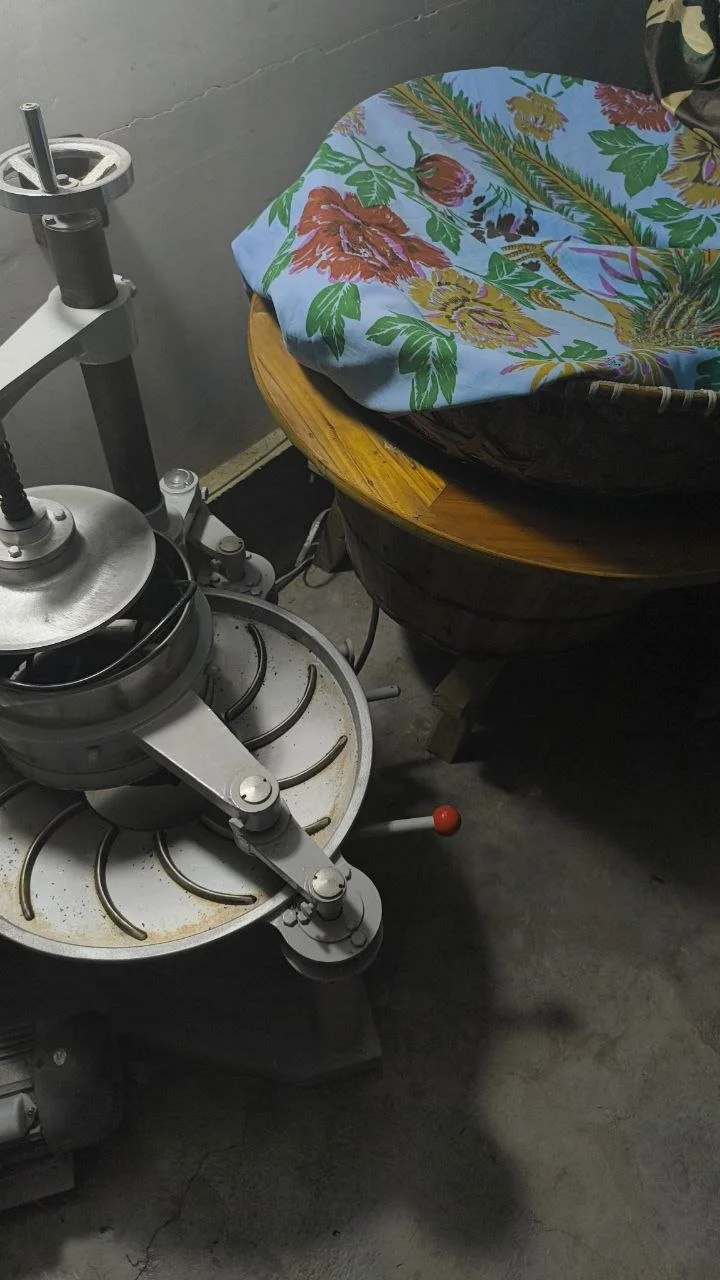
Machines for rolling and pan frying tea leaves retired for the season and kept in a tea farmer’s basement.
Character is difficult to manufacture. Creating flavour is easier than preserving identity. A tea can be made smooth, pleasant, and agreeable, but it can still feel anonymous. Another tea may be less immediately polished, but leave a clearer impression because something of its origin remains intact. It has not been blended into neutrality.
This does not mean that single-origin tea is automatically superior, or that blends have no value. Some blends are thoughtfully and beautifully made. Some single-origin teas are ordinary. Origin alone does not guarantee quality. But when a tea is good, knowing where it comes from gives the drinker a deeper way to understand it. The cup stops being an isolated flavour experience and becomes connected to a particular landscape, season, and set of decisions.
This is what we look for in our teas. Not perfection in the commercial sense, and not a tea engineered to please everyone, but tea with context and still carries some trace of where it came from. Tea that has not been stripped off its particularity in order to become more convenient. There is a difference between a tea that has been made smooth enough to disappear and a tea that leaves something behind. The first is easy to drink, and the second is easier to remember.